
Welcome to the Mathematical World!
Pliny the Elder
Roman Naturalist, Historian, and Encyclopedist
Pliny the Elder (23–79 CE), or Gaius Plinius Secundus, was a Roman polymath whose Natural History (Naturalis Historia) is among the largest works of reference to survive from antiquity. Although Pliny was not a mathematician in the technical sense, his encyclopedic compilation preserved vast swaths of Greco-Roman knowledge in natural science, geography, anthropology, botany, and mineralogy. His aim was to gather, systematize, and render accessible the learning of earlier authors, from Aristotle to Roman engineers, within a single Latin prose corpus.
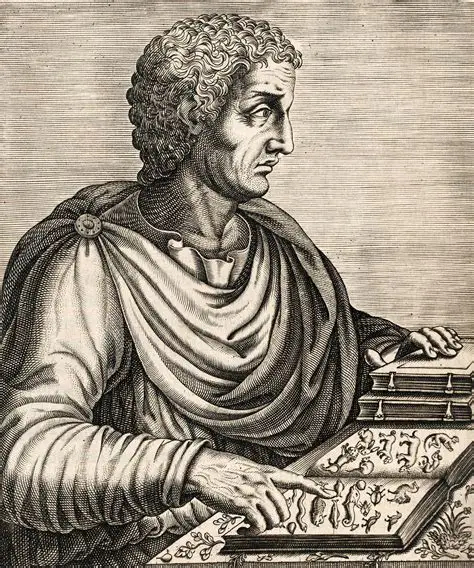
Pliny’s geography and cosmology reflect the Roman appropriation of Greek science. He described Earth as a sphere, citing earlier authorities like Hipparchus and Posidonius, and supplied rough estimates of Earth’s circumference. His ethnographic accounts, while colored by Roman imperial ideology, remain invaluable for historians because they preserve fragments from lost works. In mineralogy and metallurgy, he recorded practical techniques—such as smelting, coin minting, and pigment preparation—that allow modern researchers to reconstruct Roman technical culture.
While his methodology often lacked critical distinction between observation and hearsay, Pliny nonetheless conveyed quantitative details, such as astronomical cycles or river lengths. His adoption of ratios and measures—often expressed in Roman units like stadia or miles—links his compendium with the broader tradition of scientific description. For example, he gave eclipse periodicities, echoing the Saros cycle known from Babylonian and Greek astronomy, approximated as 223 lunar months.
Pliny’s death during the eruption of Vesuvius in 79 CE is emblematic of his scientific curiosity: as admiral of the Roman fleet, he sailed toward the eruption to investigate its phenomena and to rescue survivors, succumbing to volcanic fumes. His nephew, Pliny the Younger, preserved an eyewitness account that is still one of the earliest scientific descriptions of a volcanic eruption. Thus, Pliny the Elder represents both the encyclopedic ambition of Roman science and the spirit of natural inquiry, ensuring that fragments of classical science endured into the Middle Ages and Renaissance.

All rights reserved by the Mathematical Unity
Contact: +8801400044645
Email: mathematicalhorse1453@gmail.com
Our Discord Server: Mathematical Unity [Ulus Riyadiyat]